
A girl and her dog jog for home, offering hope that things will get better
It was a moment of pure joy, and I got to witness it
Written by |





There were a lot of things I thought my daughter would never do again after her Lambert-Eaton myasthenic syndrome (LEMS) diagnosis.
Grace was 15 when she was diagnosed, and her symptoms progressed rapidly. She lost the ability to play the sports she loved — basketball, volleyball, and softball. Then, her fingers became too weak to play the piano or sketch. She no longer felt comfortable around a swimming pool. Riding a bike was out of the question.
Within nine months, she was in a wheelchair and needed assistance getting out of bed, showering, and even going to the restroom.
Those were dark days. I didn’t see a way forward or a path to healing. Her friends were learning to drive, date, and stretch their wings — gaining independence — while Grace was forced into being deeply dependent on her parents.
Once she was diagnosed, the doctors settled on a treatment plan that worked well for her. She began gaining strength and energy. Her health took a much-needed turn for the better. Yet, even then, I knew LEMS had stolen things from Grace she would never get back.
She could no longer run or jog. After years of treatment, we were just happy she was able to walk on her own again, and we accepted the possibility that she would never jump, run, or jog again.

The best Christmas present ever
This Christmas brought a surprise, however.
A dark, cold evening just before Christmas found me bundled under an electric blanket, procrastinating about taking Georgie, our basset hound, out for her nightly walk. So Grace agreed to go with me.
On most nights, our walks are fairly short, a small loop around our neighborhood, where Georgie likes to greet people, mark her territory, and then head back home to settle into her spot on the couch.
But this night, Georgie lingered. Invigorated by the cold air, she stopped to sniff every blade of grass, Christmas inflatable, and mailbox. After an impressively slow walk, Grace and I were both cold and ready to get back into the warmth of our home.
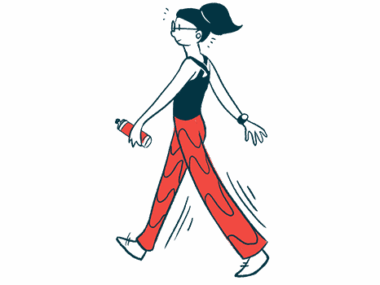
Grace encouraged Georgie to pick up the pace, and suddenly, to my surprise and delight, Georgie and Grace were trotting toward home. Not a full-out run, but a definite jog. Georgie was moving fast enough for Grace to have to jog beside her to keep up.
My first response was pure joy. Was I really seeing what I thought I was seeing? Grace, solid on her feet, jogging toward home? How grateful I was to see Grace lighthearted and laughing. It wasn’t lost on her that her body was allowing her to do something she hadn’t done in five years.
I thought I should try to catch up to them, worried Grace might fall, as she did many times before her diagnosis. But she didn’t fall. She didn’t hit a crack in the sidewalk. Georgie didn’t get tangled up under her feet. It was a moment of pure joy with a girl and her dog. And I got to witness it.
Will she go on to run marathons and play sports? Probably not. But the idea that she could do more than any of us ever thought she could do again was huge.
So, be encouraged. Who knows what tomorrow will bring? All those affected by LEMS are aware of the hardship that comes with this diagnosis. We need to be reminded about what good might come, what might be restored. My wish for the new year is that many of us will experience what Grace and I experienced that night — hope that things will get better.
Note: Lambert-Eaton News is strictly a news and information website about the disease. It does not provide medical advice, diagnosis, or treatment. This content is not intended to be a substitute for professional medical advice, diagnosis, or treatment. Always seek the advice of your physician or other qualified health provider with any questions you may have regarding a medical condition. Never disregard professional medical advice or delay in seeking it because of something you have read on this website. The opinions expressed in this column are not those of Lambert-Eaton News or its parent company, Bionews, and are intended to spark discussion about issues pertaining to Lambert-Eaton myasthenic syndrome.

Leave a comment
Fill in the required fields to post. Your email address will not be published.